Vintage and mid-century finds, hand-picked in South Wales
How lustreware brought the shine of copper to ordinary homes, and its revival in Welsh studio pottery.
Before electroplating, a gleaming copper jug was beyond most households. Lustreware brought that shine to the dresser for a fraction of the price, and it has never quite gone out of fashion.
Lustre decoration is centuries old, but English potters only took it up at the end of the eighteenth century. The first all-over lustre was made around 1805, and by 1810 it was widespread. Potters in Staffordshire led the way, with others in the north of England, Scotland and Wales following.
Copper lustre was the most common kind. It was made by applying a thin film of metal oxide to the pottery before a final firing: gold oxide on red earthenware, or copper oxide on white wares, gave a warm coppery shine. Silver lustre, its cousin, earned the nickname “the poor man’s silver”.
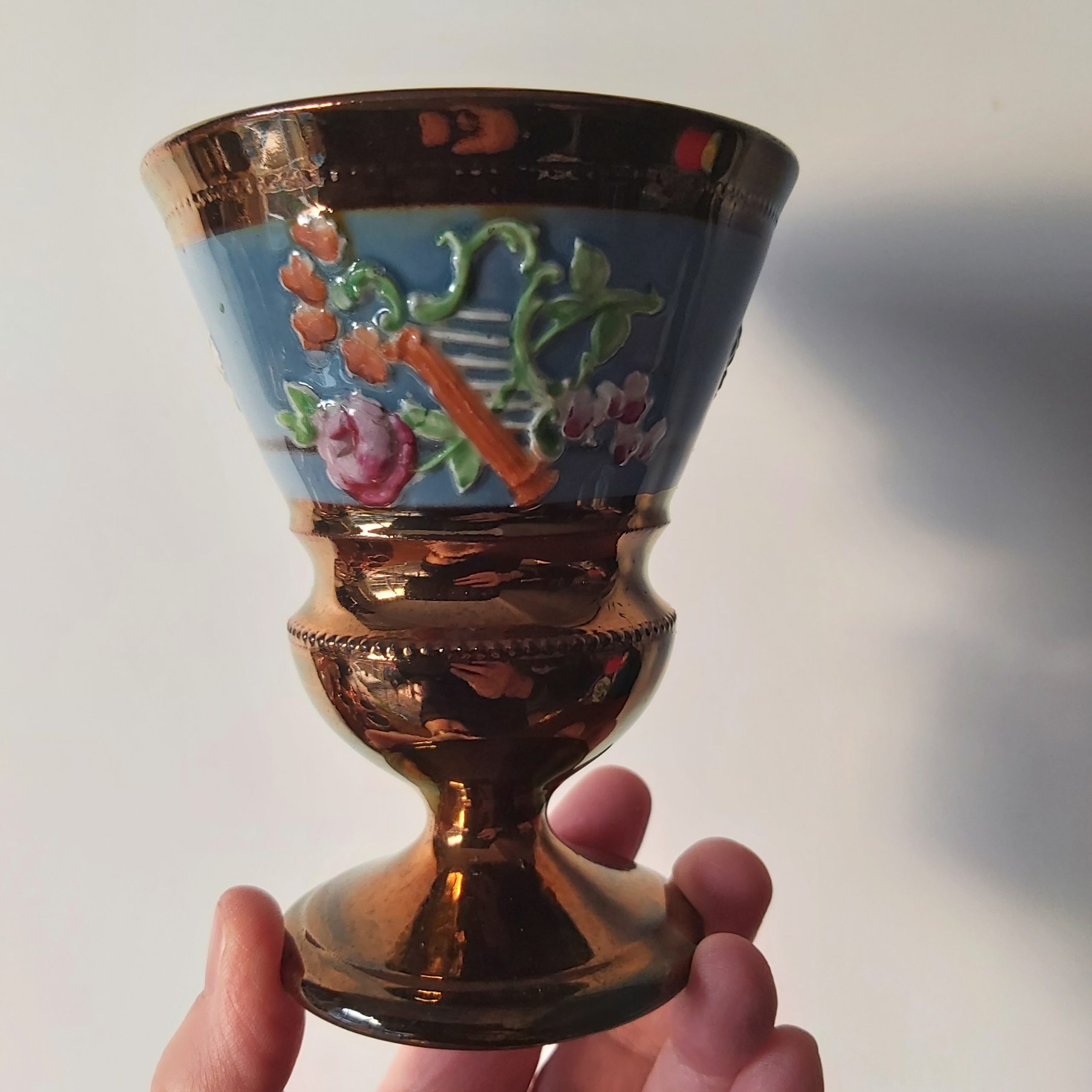
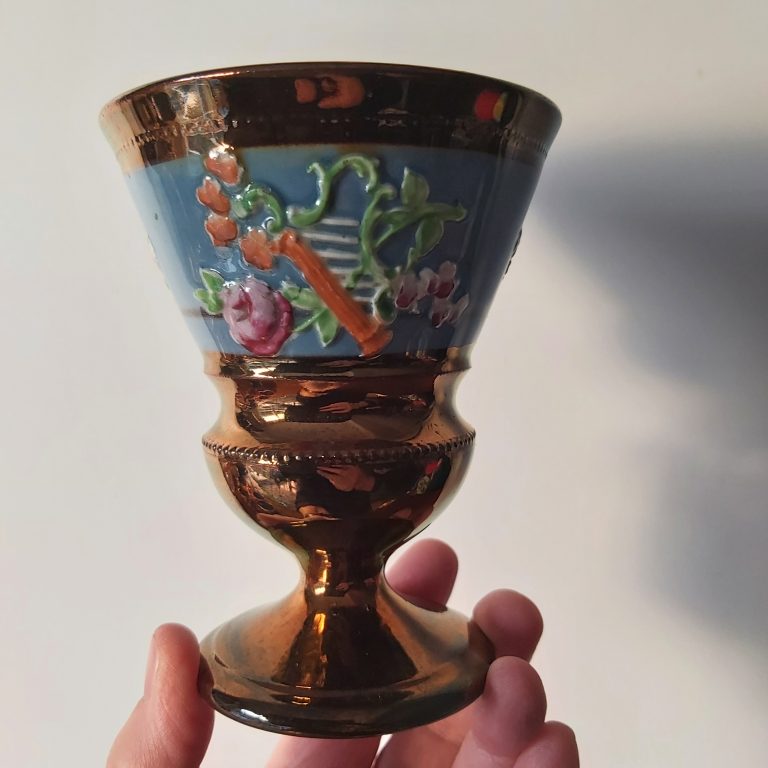
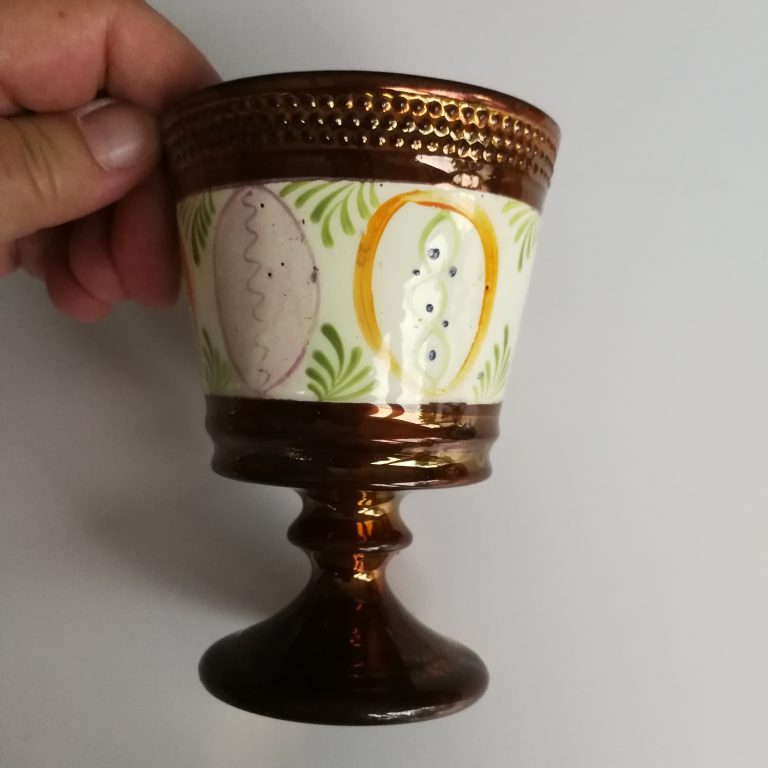
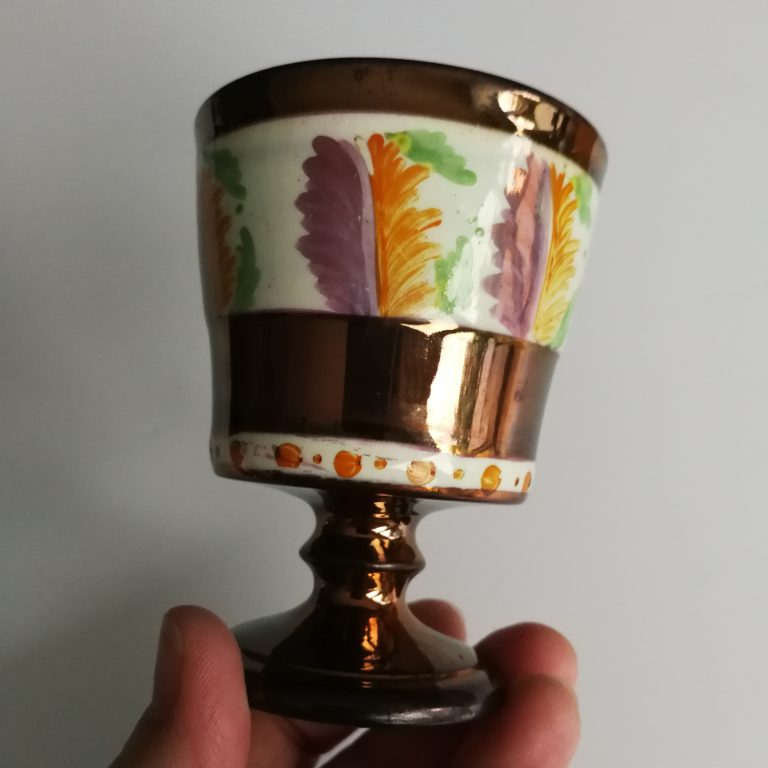
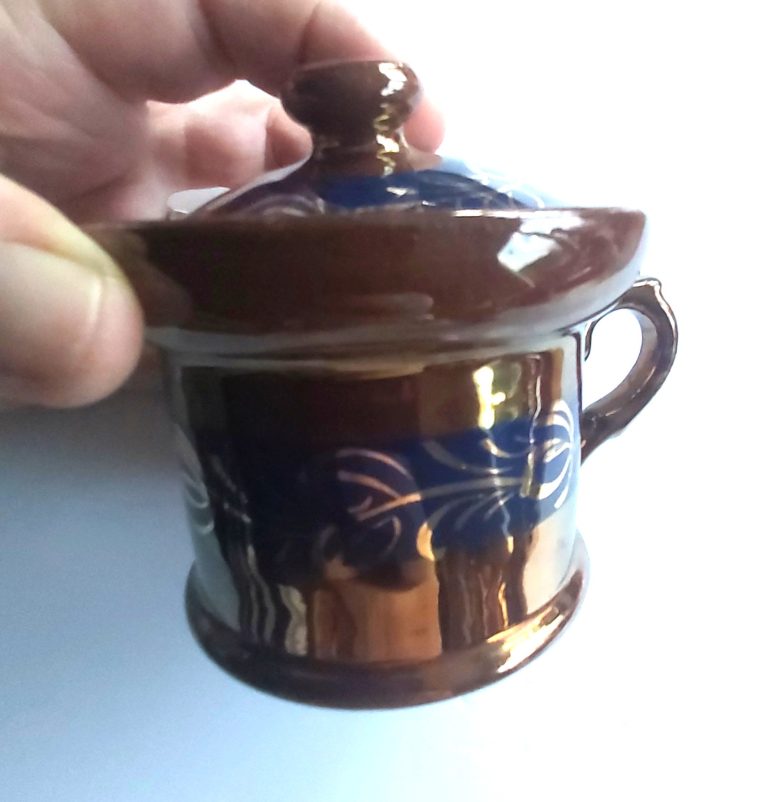
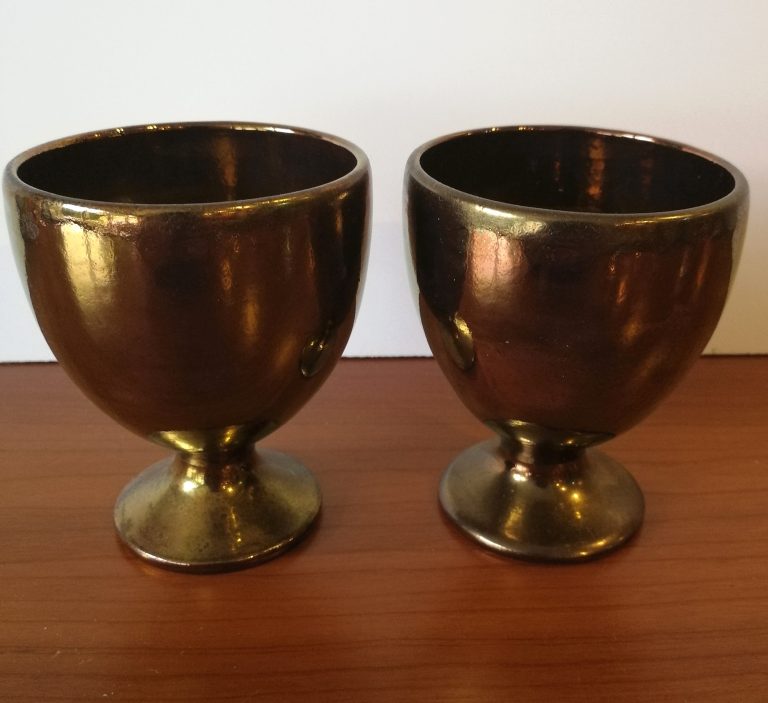
All-over lustre was at its height from about 1810 to 1840, made in the same shapes as fashionable silver and copper: jugs, mugs, cups, salts, goblets and teaware. When silver electroplating arrived in 1840, cheap shiny metal became available and all-over lustre declined, but painted and banded lustre carried on through the Victorian period. Our early Victorian goblets, salt and lidded cup, from around 1840, come from exactly this moment: copper lustre bodies with hand-painted bands of flowers and grapes.
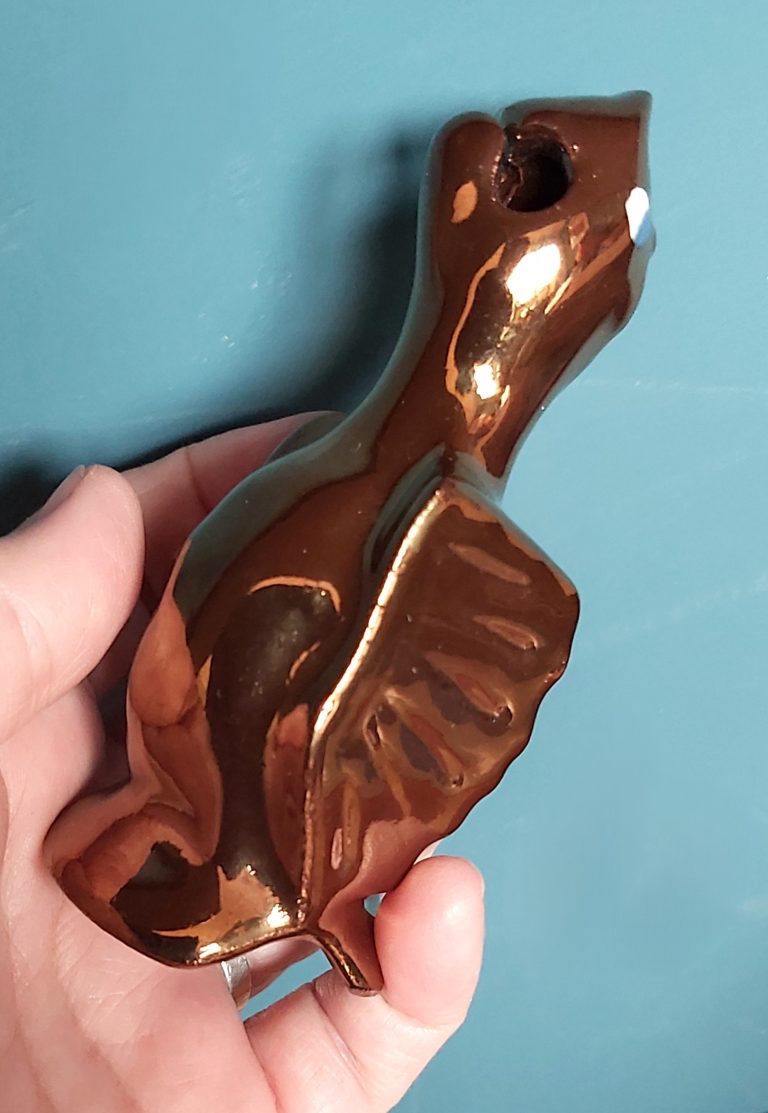
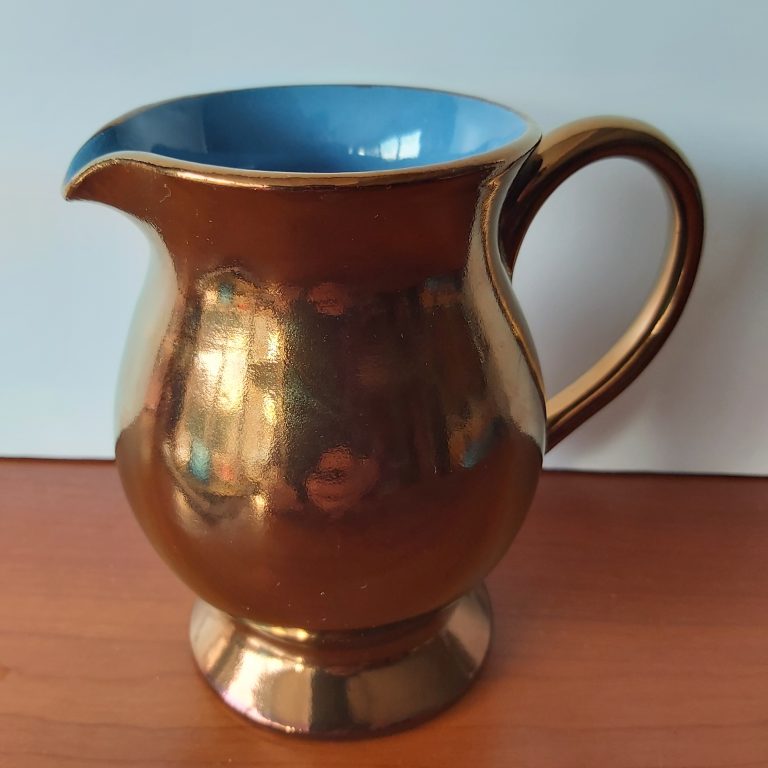
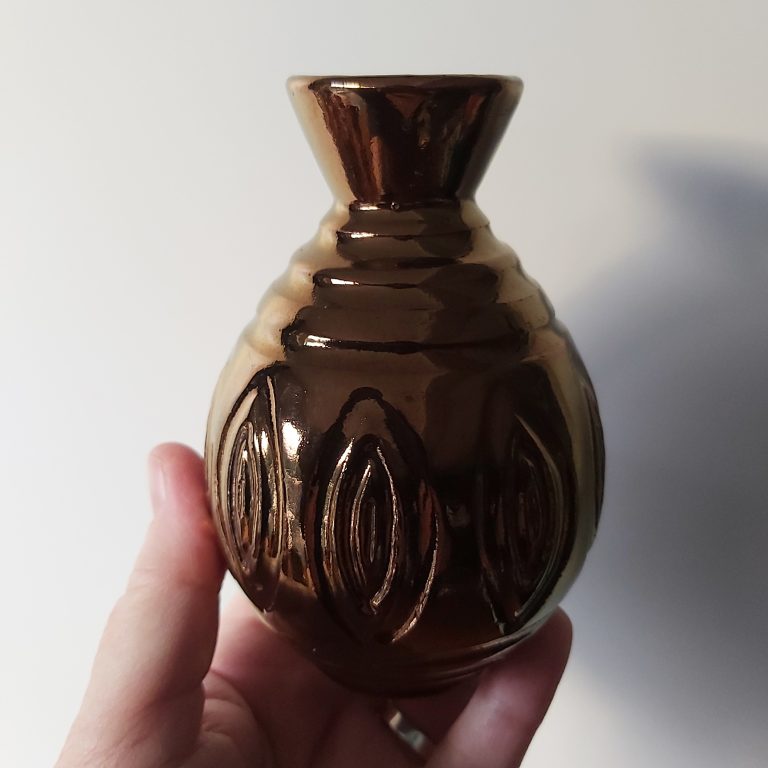
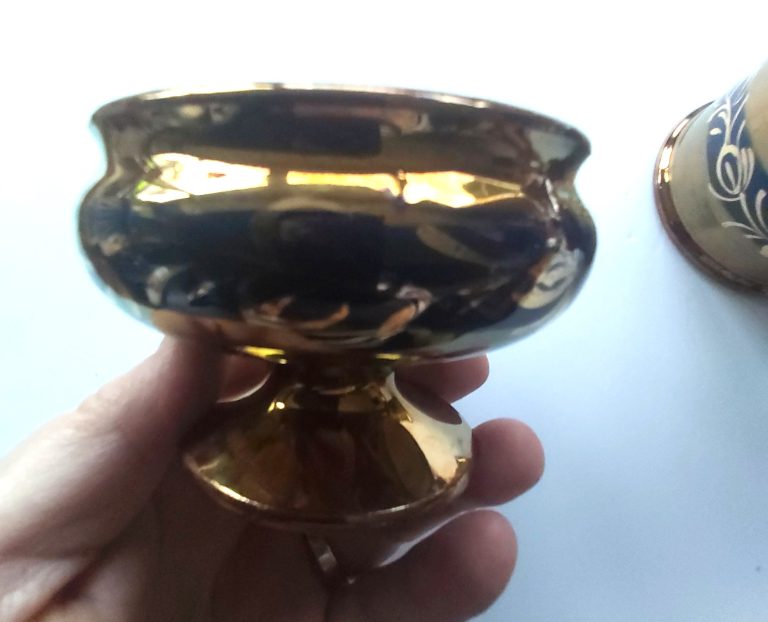
A century later, copper lustre found new life in studio potteries. In Wales, Creigiau Pottery made it their signature from the late 1940s, pairing the copper outside with a bright blue glaze inside. Put a Victorian goblet next to a Creigiau jug and you can see a 150-year conversation between potters.
Victorian copper lustre:
Creigiau copper lustre:
Source: Maryland Archaeological Conservation Laboratory: Lustre wares.
Love these finds?
Keep it for later, or share it with a fellow collector.