Vintage and mid-century finds, hand-picked in South Wales
Chinese famille rose porcelain, Japanese Hoya crystal and hand-carved ebony elephants.
Porcelain painted in soft pinks, crystal from Tokyo and elephants carved from dark, heavy ebony: some of our most striking pieces come from much further afield.
Famille rose is a style of Chinese porcelain painted with a palette of soft enamels, above all pink. It first appeared in the 1720s and was fully developed by around 1730, under the Yongzheng emperor. Qing records called it yangcai, “foreign colours”, because the palette is believed to have arrived through European Jesuits at the imperial court.
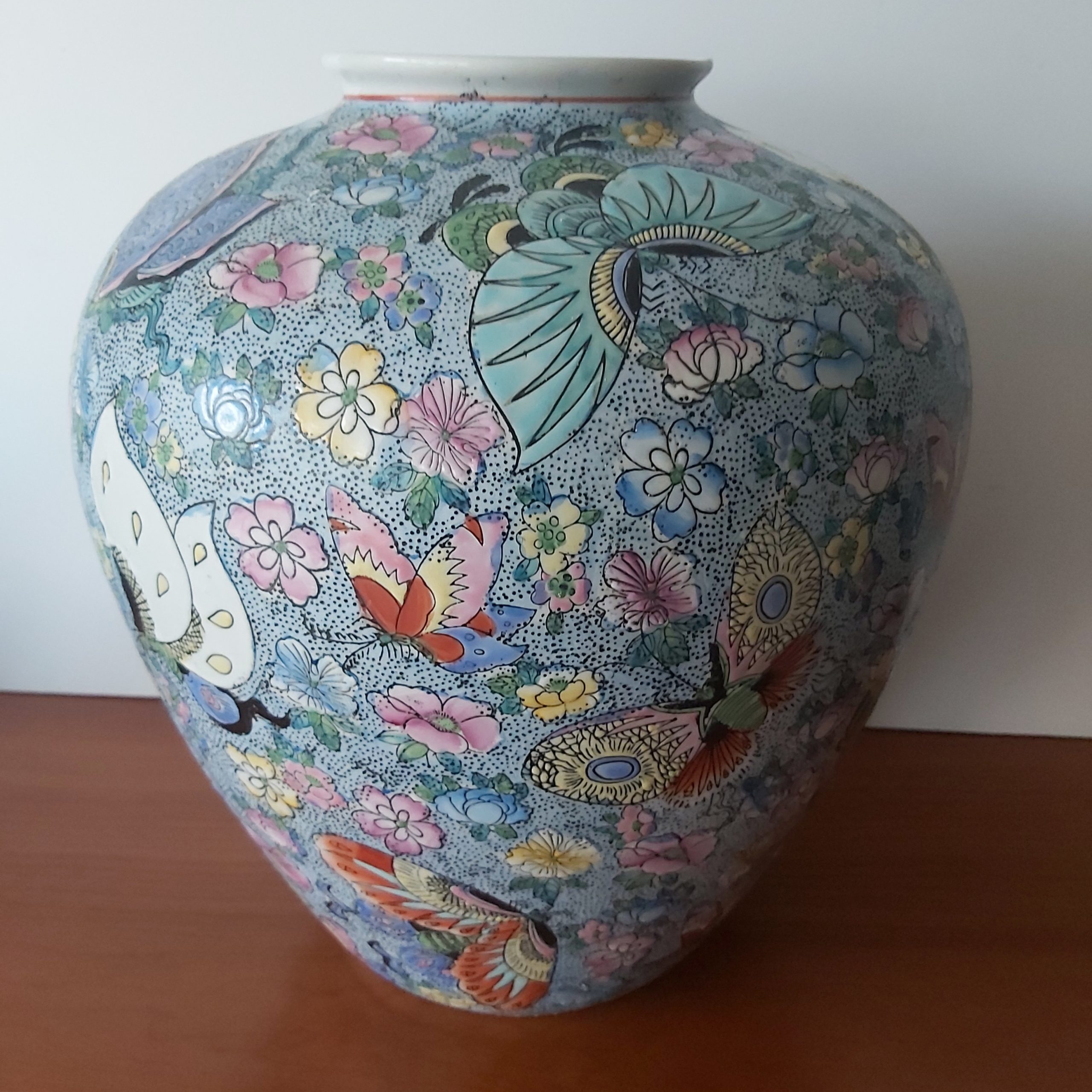
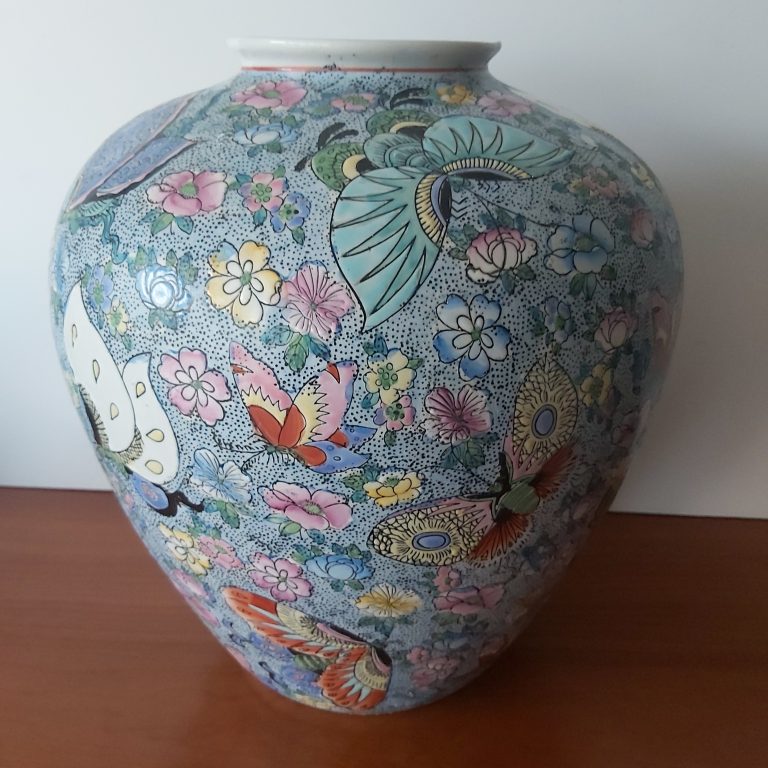
Famille rose was exported to the West in huge quantities and was copied by European factories such as Meissen and Chelsea. From the late eighteenth century, decorators in Canton painted richly decorated wares for export, and the style stayed popular through the nineteenth and twentieth centuries. Our 12-inch vase, painted with butterflies, follows that long tradition.
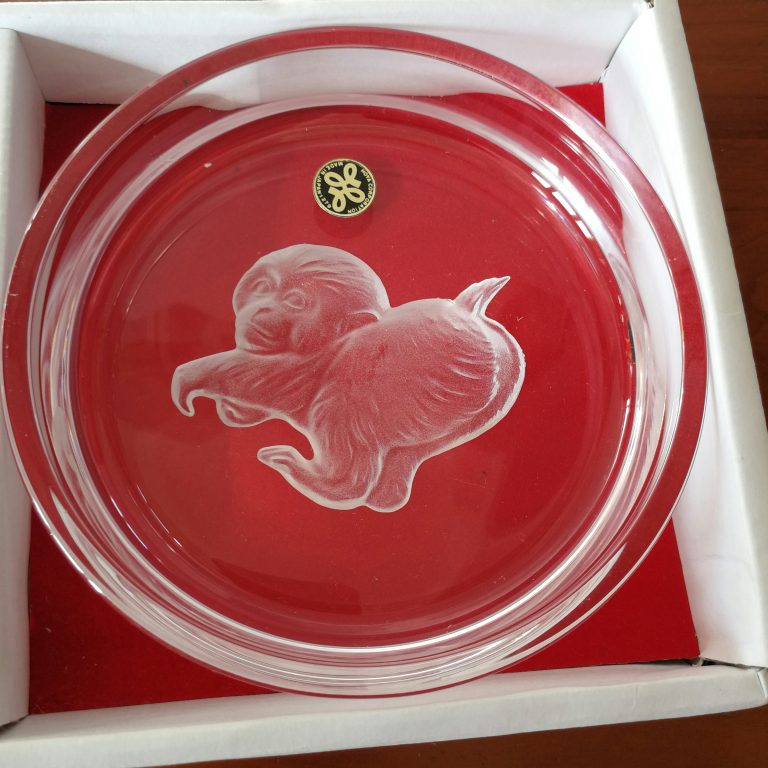
Hoya was founded in Tokyo in 1941 as an optical glass maker, and in 1945 it began making crystal tableware. For decades its crystal was known for its clarity and precise design, until the company left the crystal business in 2009 to focus on optics. Our pair of Hoya dishes celebrates 1980, the Year of the Monkey in the Chinese zodiac.
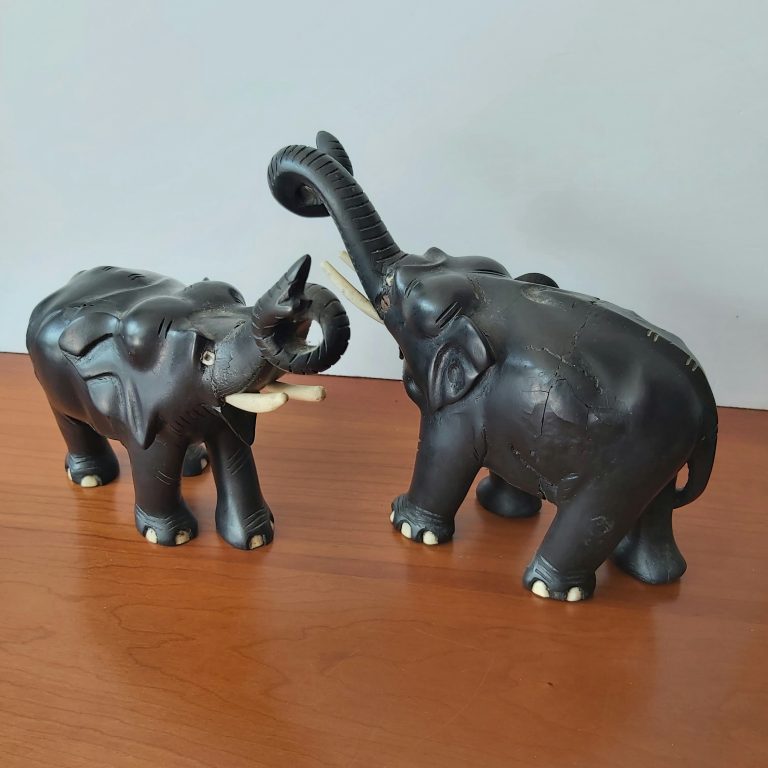
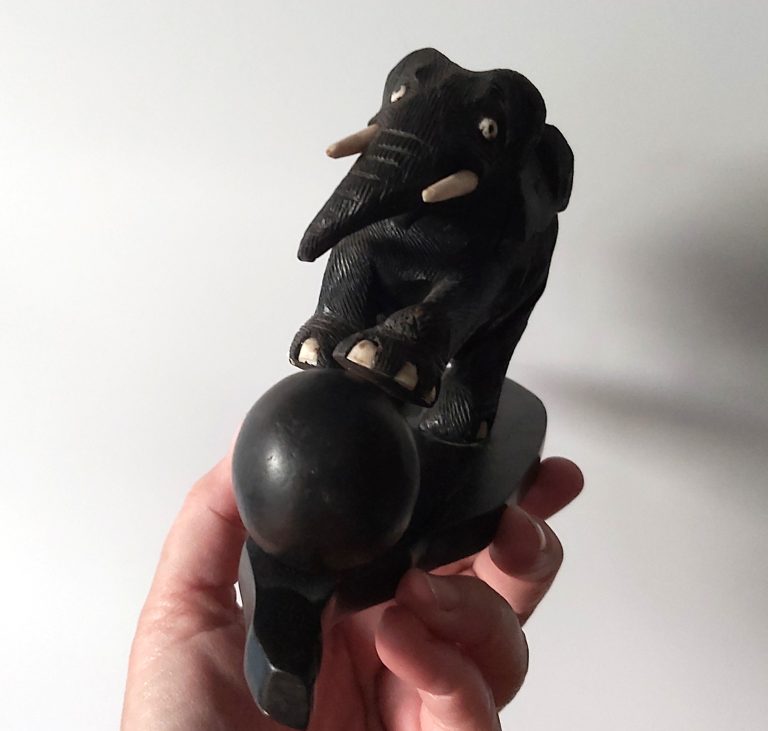
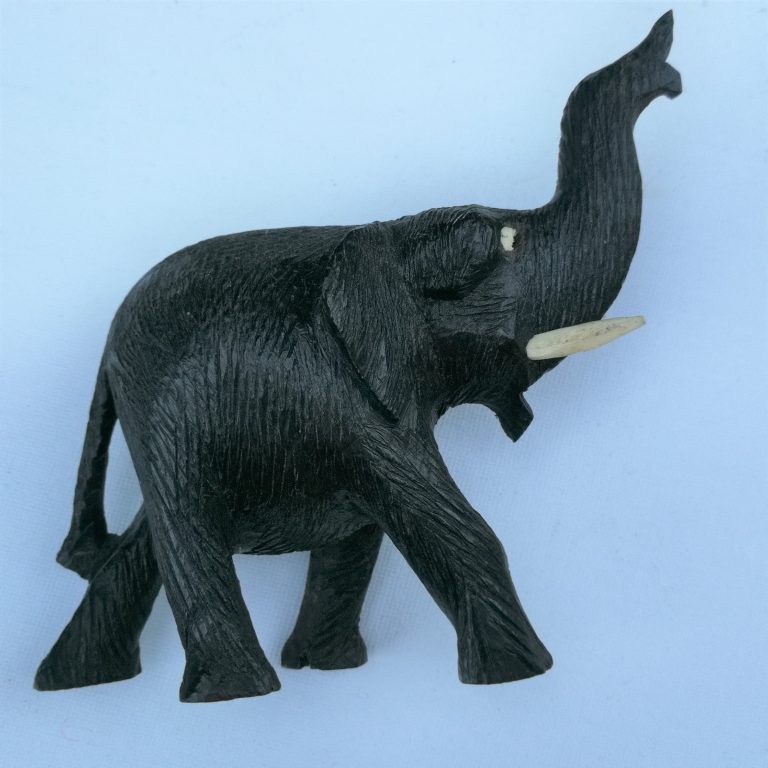
Hand-carved ebony elephants, sometimes with bone tusks, were often brought home as souvenirs of travel and service overseas in the mid-twentieth century. Ebony is dense, heavy and takes a deep polish, and the best carvings capture real character and movement.
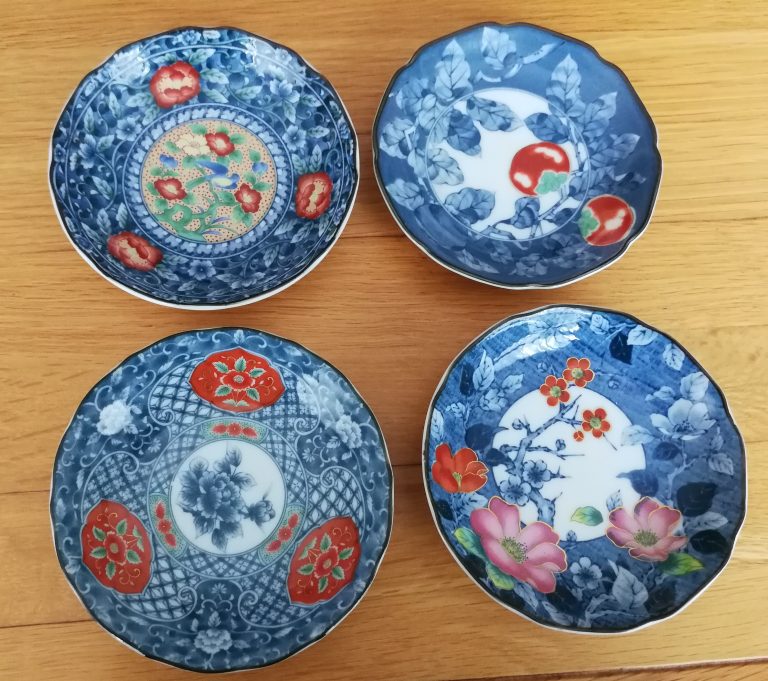
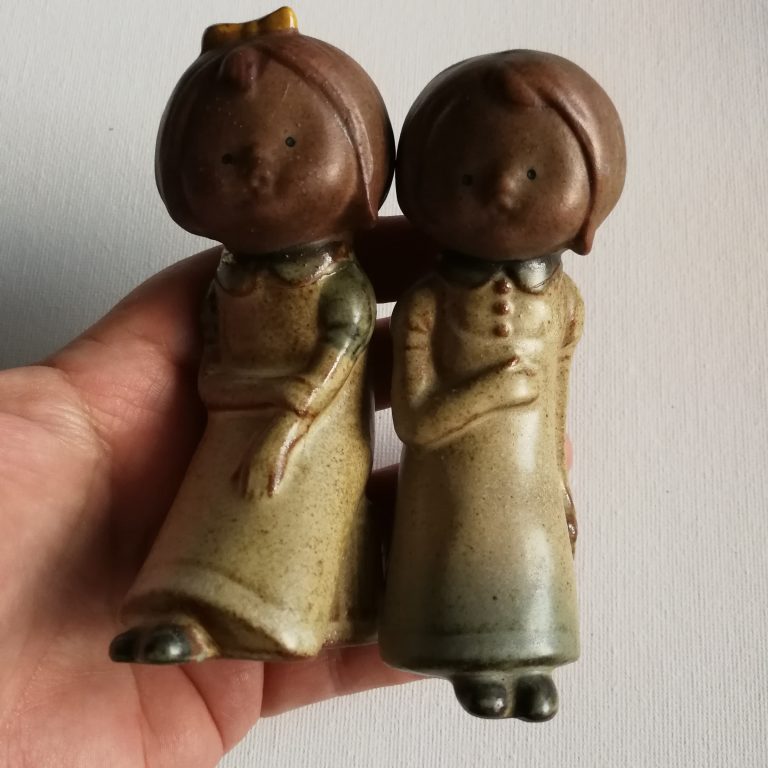
We also have a set of four Japanese cabinet plates and a pair of Seto craft girl figurines, a charming slice of mid-century Japanese kitsch.
Sources: Wikipedia: Famille rose; Hoya: Company history.
Love these finds?
Keep it for later, or share it with a fellow collector.
