Vintage and mid-century finds, hand-picked in South Wales
Brazil's pioneer of kinetic art painted with moving light, and filled a small zoo with op-art acrylic animals.

He was one of the pioneers of kinetic art, an inventor who painted with moving light. He also filled a small zoo with crisp acrylic animals that collectors now hunt across the world.
Abraham Palatnik was born on 2 February 1928 in Natal, in north-eastern Brazil, the son of Jewish immigrants from Ukraine. When he was four, the family moved to what was then Mandatory Palestine. In Tel Aviv he studied at a technical school, learning mechanics and engineering, and later took art classes. That mix of the workshop and the studio shaped everything he went on to make.
He returned to Brazil in the late 1940s and settled in Rio de Janeiro, where he lived and worked for the rest of his life.
In Rio, Palatnik’s friendship with the critic Mário Pedrosa, and visits to the art studio of a psychiatric hospital run by Dr Nise da Silveira, led him to question what a painting could be. His answer was the Aparelho Cinecromático, or “cinechromatic device”: a box in which coloured shapes, lit by moving bulbs, drift and change behind a translucent screen.
He showed it at the first São Paulo Biennial in 1951. It used some 600 metres of wire and 101 lamps, and it did not fit any of the existing categories. The international jury gave it a special honourable mention, and Pedrosa called it “the true art of the future”. From the 1960s he went on to make motorised kinetic objects, and in 1964 his work was shown at the Venice Biennale.
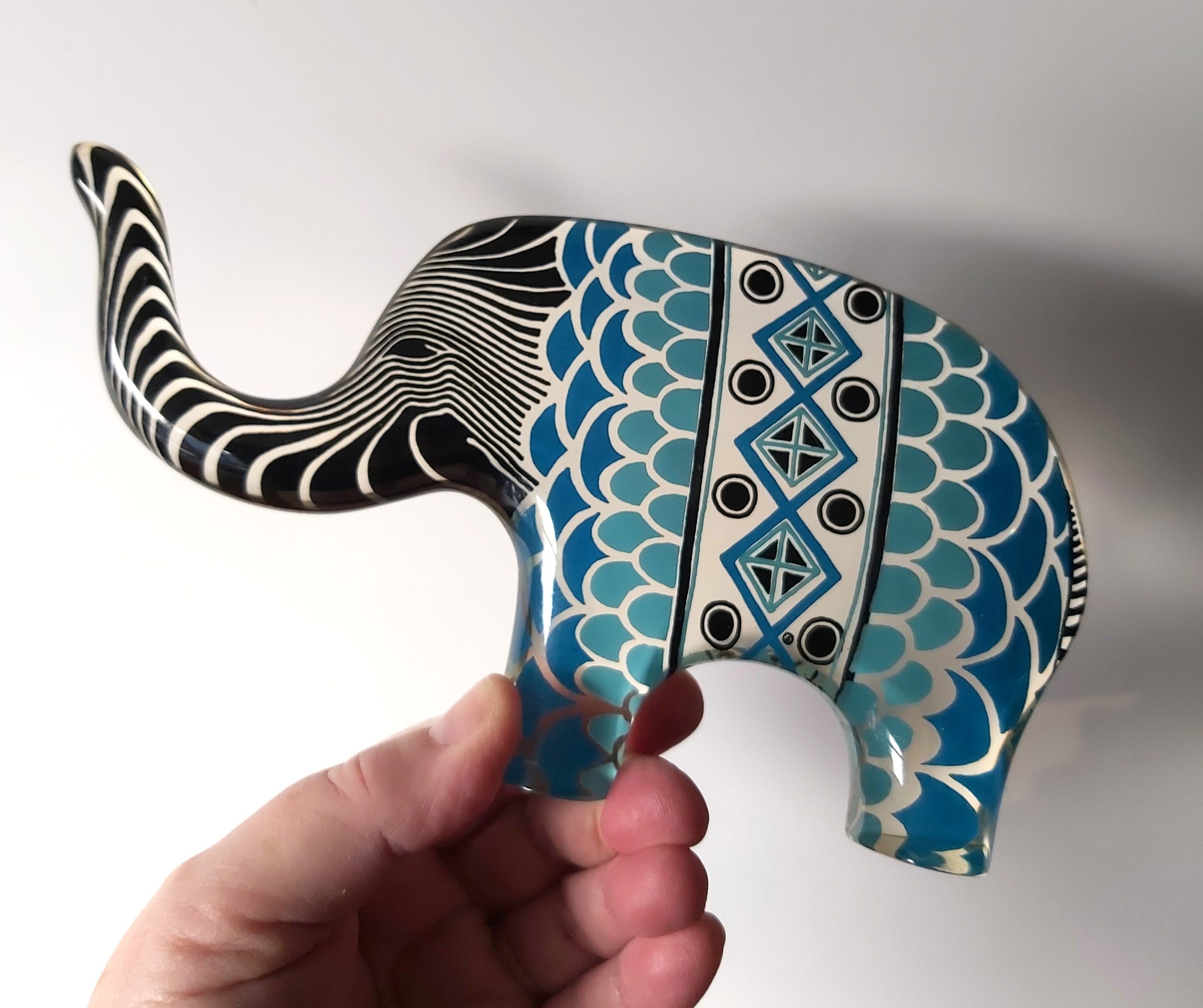
Alongside his gallery work, Palatnik designed decorative pieces in acrylic and resin. Between the 1950s and the 1990s he produced a whole menagerie of animals: cats, birds, giraffes, elephants, ducks, pandas and more. They were sold well beyond Brazil, to Europe and Asia.
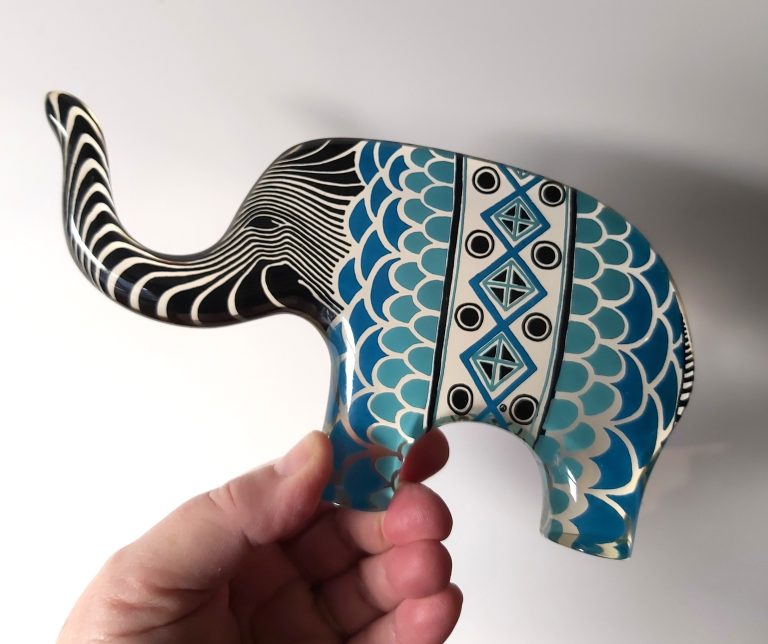
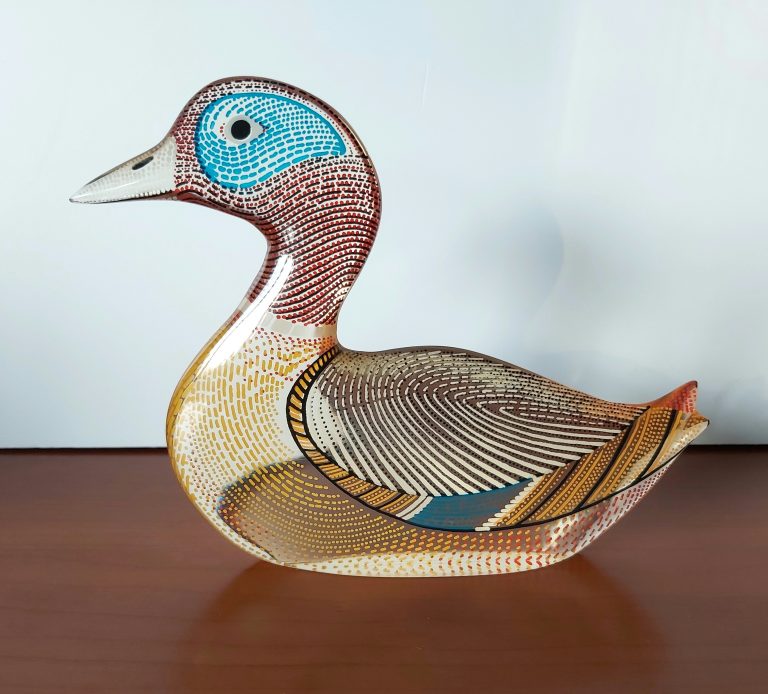
Look closely at one of them and you can see the artist at work. Bold geometric stripes and bands are set inside the clear acrylic, so the pattern shifts as you walk around the piece: the same optical play as his light machines, frozen into a small animal you can hold in your hand. Most pieces are unsigned. A few carry a small “Pal.” mark, so collectors identify them by their shape, the precision of their lines and the quality of the polish.
Palatnik kept experimenting into his nineties. He died in Rio de Janeiro on 9 May 2020, aged 92. His cinechromatic devices are now seen as landmarks of kinetic art, and his acrylic animals have become sought-after pieces of mid-century Brazilian design.
We currently have three of Palatnik’s 1960s acrylic animals:
Sources: Wikipedia; ArtReview obituary; Mercado Negro Antiguidades.
Love these finds?
Keep it for later, or share it with a fellow collector.