
Vintage and mid-century finds, hand-picked in South Wales
How glassmakers turned a flaw into a feature, from Venini on Murano to Whitefriars in London.
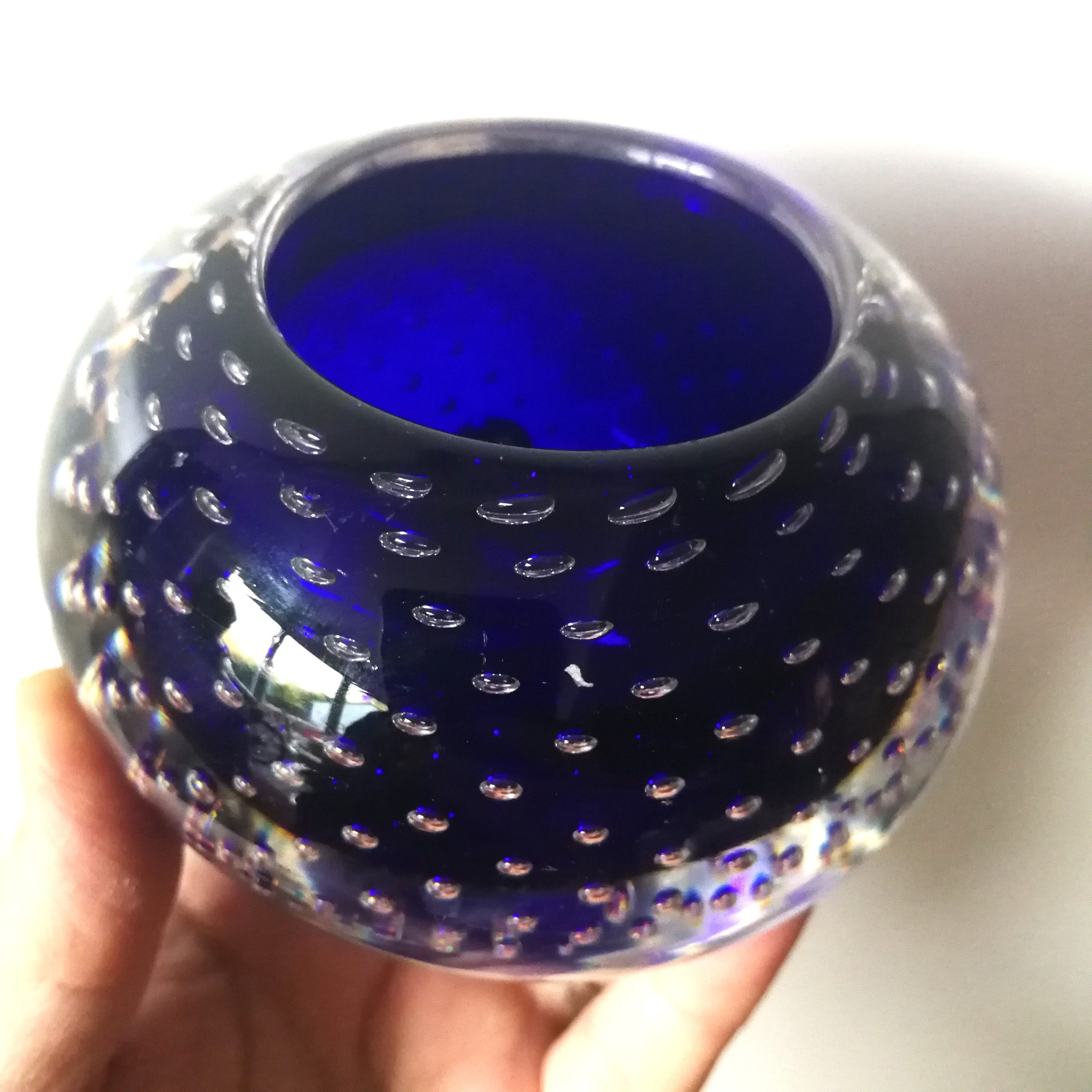
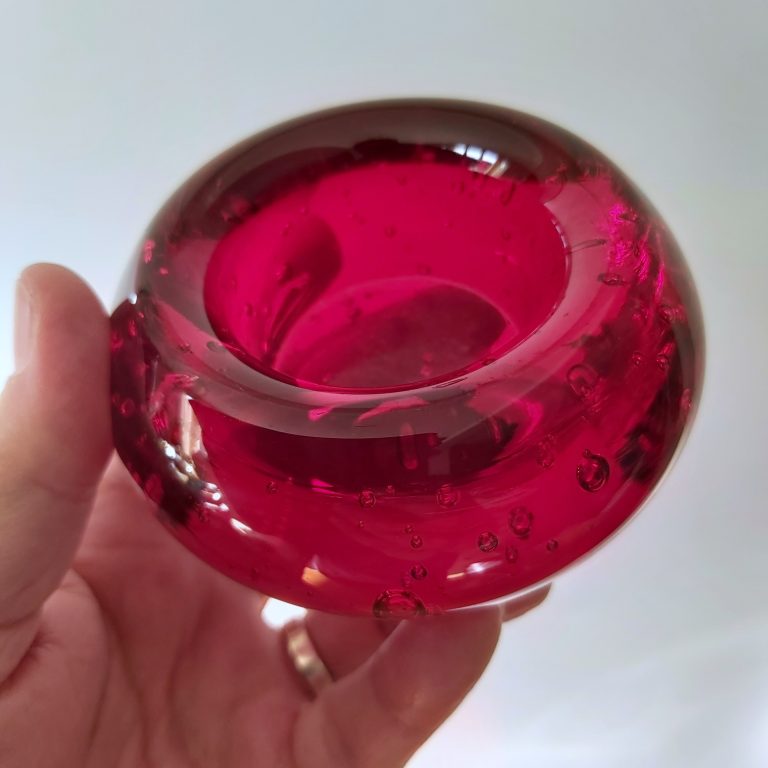
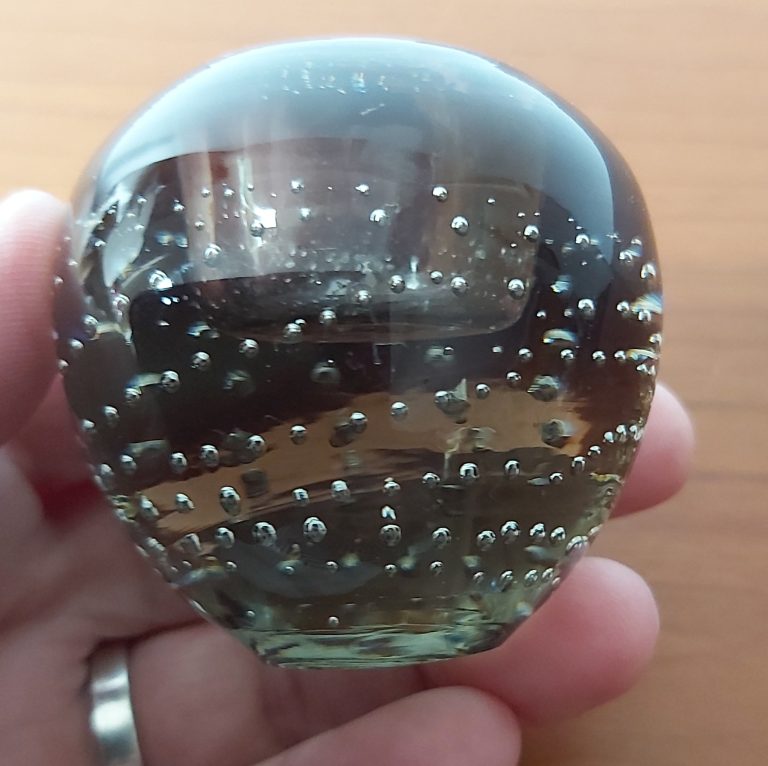
Hold a piece up to the light and you will see them: tiny pearls of air frozen inside the glass. Bubbles were once a flaw to be avoided. In the twentieth century, glassmakers turned them into one of the most beautiful effects in glass.
For centuries, a bubble in glass was a sign of poor workmanship. Modern designers saw it differently. Trapped air catches the light, adds depth to thick glass and makes every piece slightly different.
On Murano, the architect Carlo Scarpa worked with the Venini glassworks from 1932 to 1947. One of their inventions was a bollicine, glass filled with tiny bubbles. The effect was created by adding potassium nitrate to the molten glass; in the heat of the furnace it releases gas, which forms a mist of small bubbles. Venetian glassmakers also became known for neat rows of larger “controlled” bubbles set deep in heavy glass, the look often called bullicante.
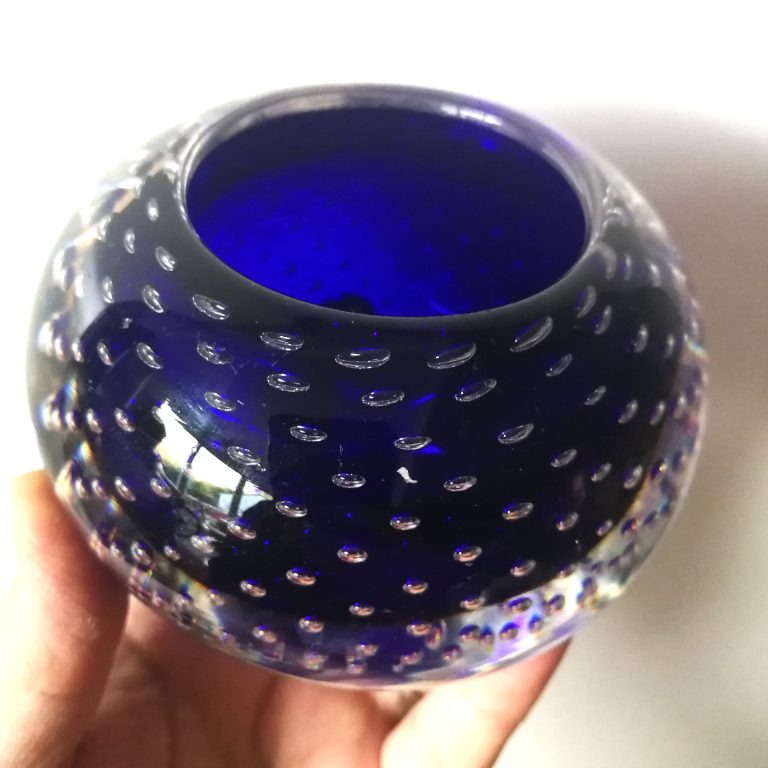
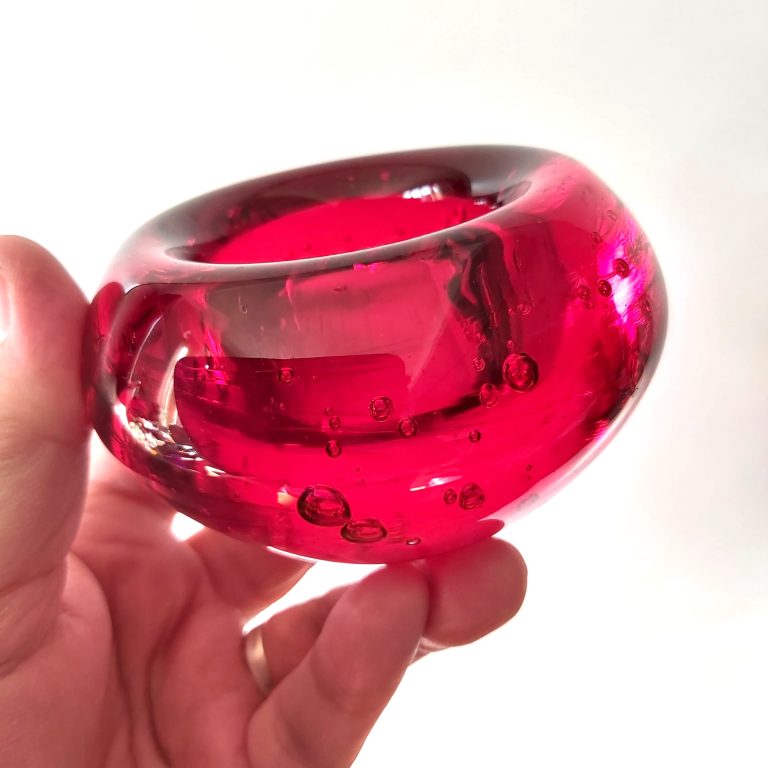
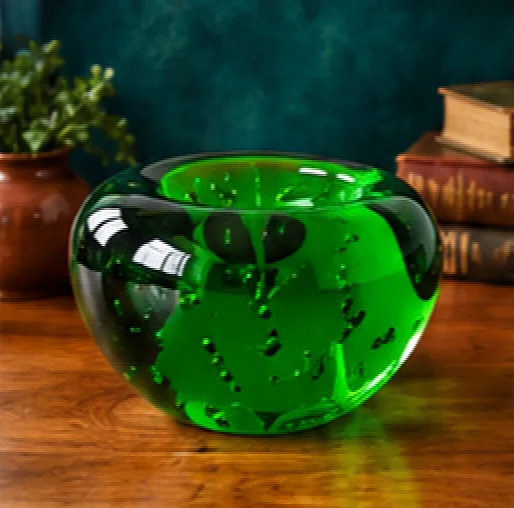
In Britain, the great name in bubbled glass is Whitefriars. The glassworks traced its history back to the seventeenth century off Fleet Street in London. In 1834 it was bought by the wine merchant James Powell, and as James Powell & Sons it became one of Britain’s leading glassmakers, moving to a new factory at Wealdstone in 1923. Its mid-century bowls and vases with controlled bubbles, in ruby, blue, green and smoke, are much loved today. Designer Geoffrey Baxter joined in 1954 and later created the famous textured range, and production ended in 1980.
To make even rows of bubbles, the glassmaker presses the hot glass into a mould lined with spikes, leaving a pattern of little dents. When the glass is covered with another layer, each dent traps a pocket of air, giving the regular, “controlled” pattern. The heavier and clearer the glass, the more the bubbles seem to float.
Bubbled glass was made by many factories in Italy, Britain, Scandinavia and elsewhere, and much of it is unmarked. That is why some of our pieces are described as “maybe Murano”: the style and quality point to Venice, but without a mark we will not claim more than we can show.
Sources: The Metropolitan Museum of Art: Carlo Scarpa, Venini; Wikipedia: James Powell and Sons (Whitefriars).
Love these finds?
Keep it for later, or share it with a fellow collector.
