
Vintage and mid-century finds, hand-picked in South Wales
The Staffordshire gilder who became Britain's most famous pottery designer, and the pieces in our shop that share her story.
She started out adding gold lines to plates at the age of thirteen and became one of the most famous designers in Britain. Here is the story of Clarice Cliff, the Staffordshire potteries she made her name at, and the pieces in our shop that share her story.
Clarice Cliff was born in Tunstall, Staffordshire, in 1899, in the heart of the Potteries. At thirteen she was working as a gilder, painting gold lines onto traditional ware, and she went on to learn freehand painting and to study art and sculpture at the Burslem School of Art.
In 1916 she moved to A J Wilkinson’s Royal Staffordshire Pottery at Newport, Burslem, where she built up her skills in modelling, gilding and hand-painting. Her talent caught the eye of the factory’s owner, Colley Shorter, who backed her ideas and later became her husband.
In 1927 Shorter gave her a studio at the neighbouring Newport Pottery, which he had bought in 1920. Working on plain or slightly flawed ware, she painted bold, freehand patterns in bright on-glaze colours. The first was a simple pattern of triangles, and its name, Bizarre, became the name for the whole range.
It was a sensation. Her Crocus pattern of 1928 sold so well that a team of around twenty women painted nothing else for much of the 1930s, and by 1929 about seventy young decorators, the “Bizarre girls”, were working on her designs. Patterns such as Fantasque, Autumn and Honolulu followed, on striking Art Deco shapes like Conical, Bon Jour and Stamford.
In 1930 she was made art director of both Newport Pottery and A J Wilkinson, a remarkable position for a woman in industry at the time.
By the mid-1930s fashion was turning towards softer, modelled ware, and Clarice Cliff moved with it. Her My Garden range of 1934 used little modelled flowers as handles and bases, and she produced designs modelled with corn and fruit.
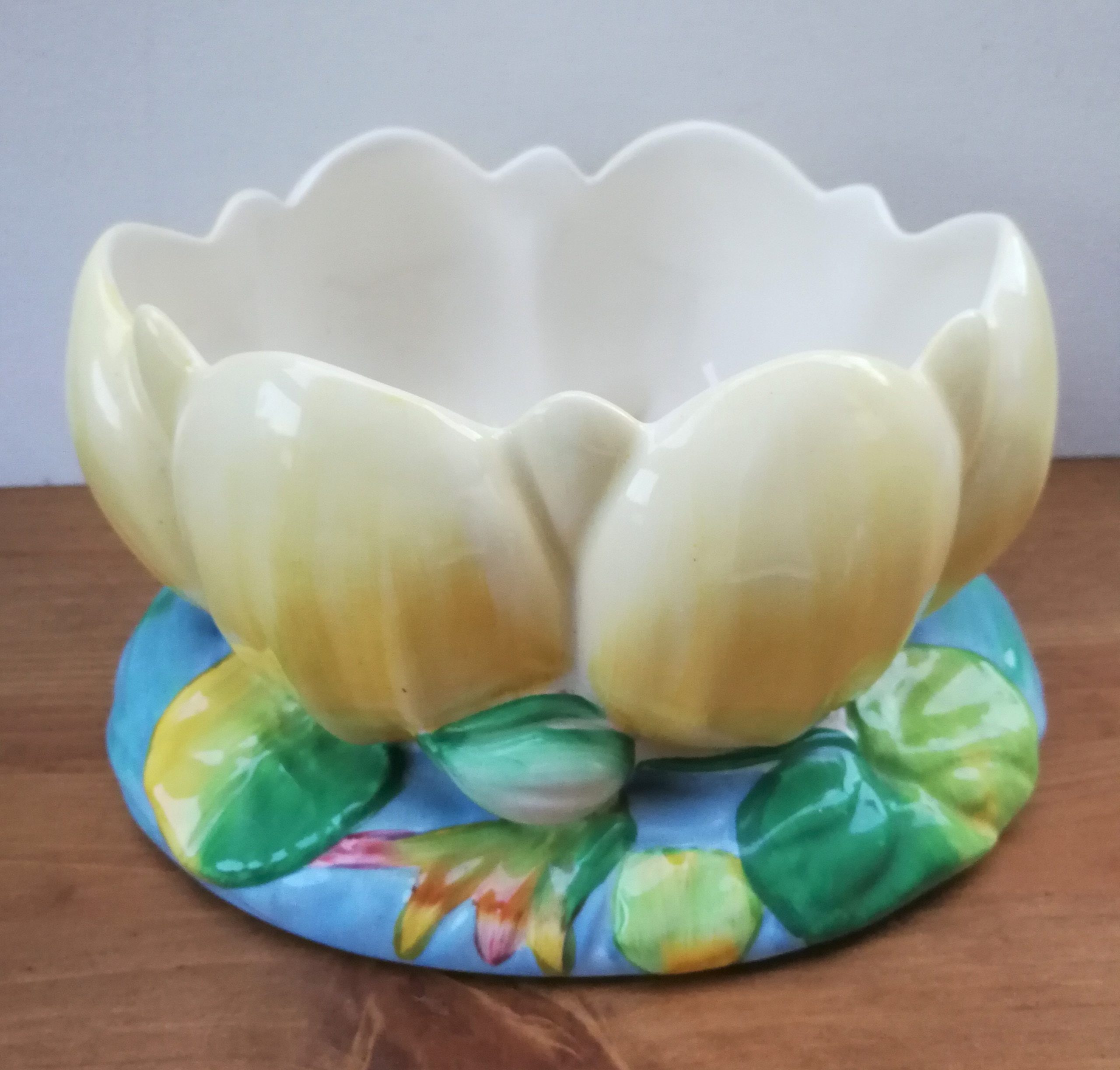
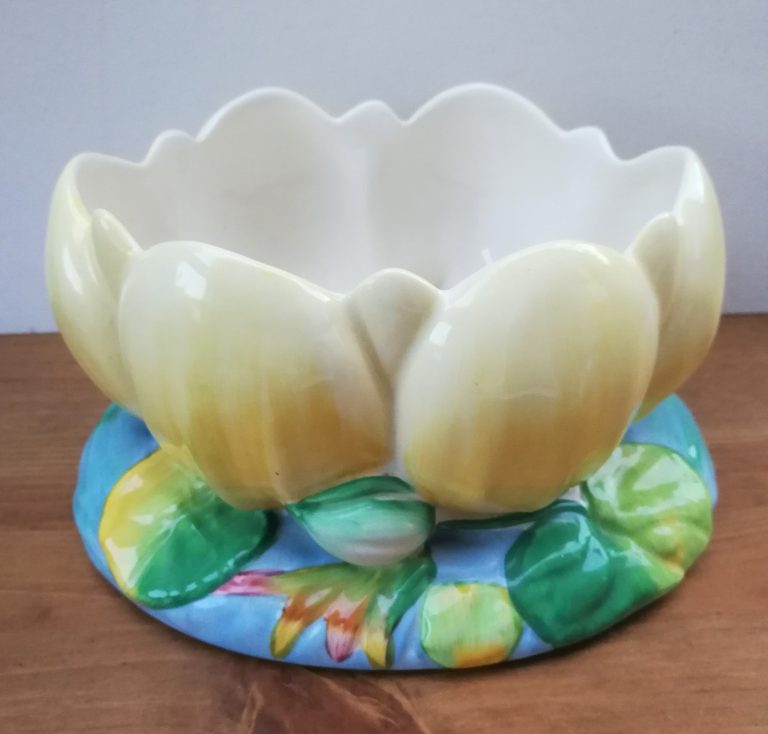
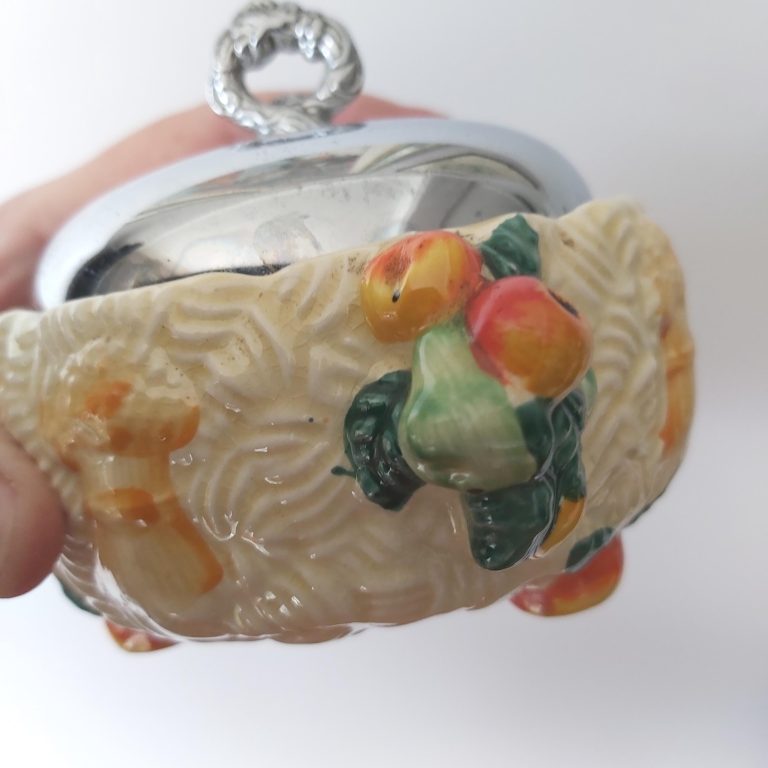
Our Waterlily planter comes from this period. Its gathered petals, tiny buds resting on the lily pads and reed leaves floating on the water show just how tactile her later designs became. Our Celtic Harvest jam pot, with its raised fruit and chromed lid, belongs to the same love of modelled, natural forms.
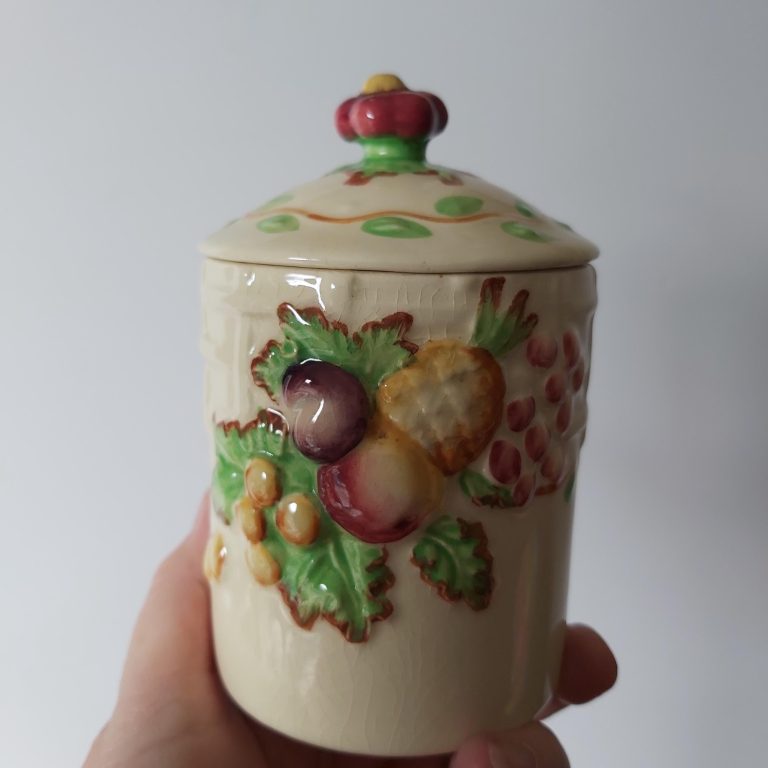
Not everything made at A J Wilkinson’s works was designed by Clarice Cliff, but the factory is woven into her story. Our Royal Staffordshire majolica style jam pot, with raised fruit and a fruit finial, carries the Royal Staffordshire mark of the same Burslem works where she trained and later became art director. It is an affordable way to own a piece of that history, and we have three of them.
During the Second World War only plain white utility ware could be made, and after the war Clarice Cliff did not return to creative design. When Colley Shorter died in 1963, she sold the factory the following year to Midwinter, one of the most forward-looking potteries of the post-war years, and retired. She died in 1972.
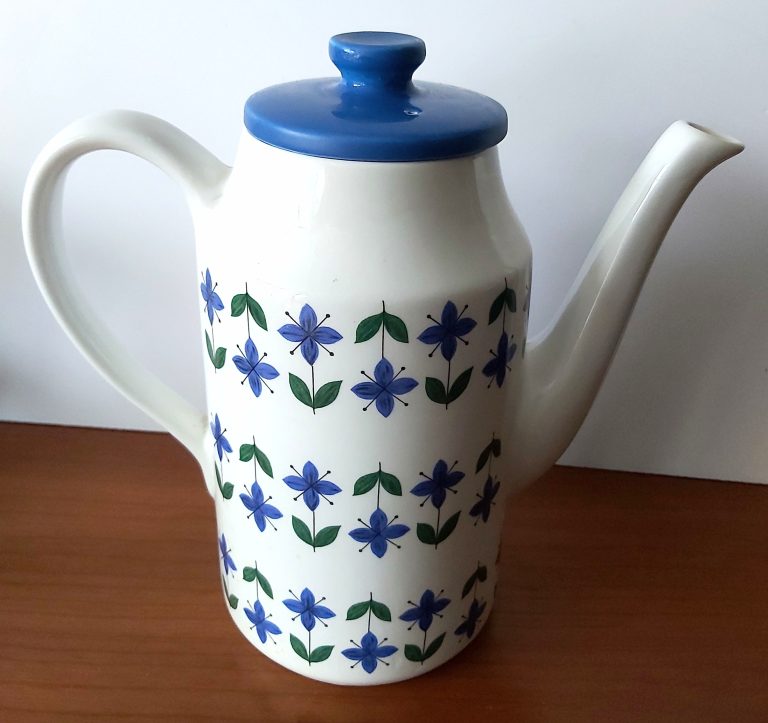
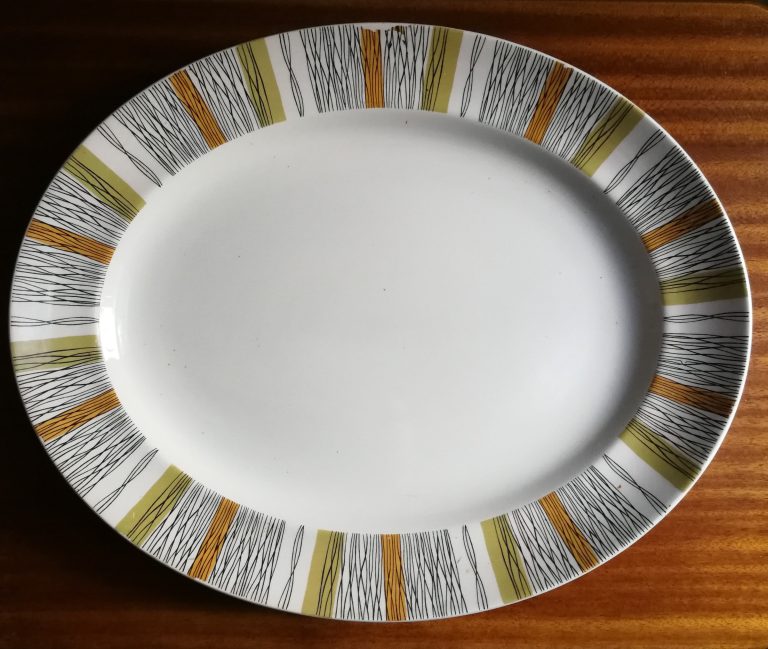
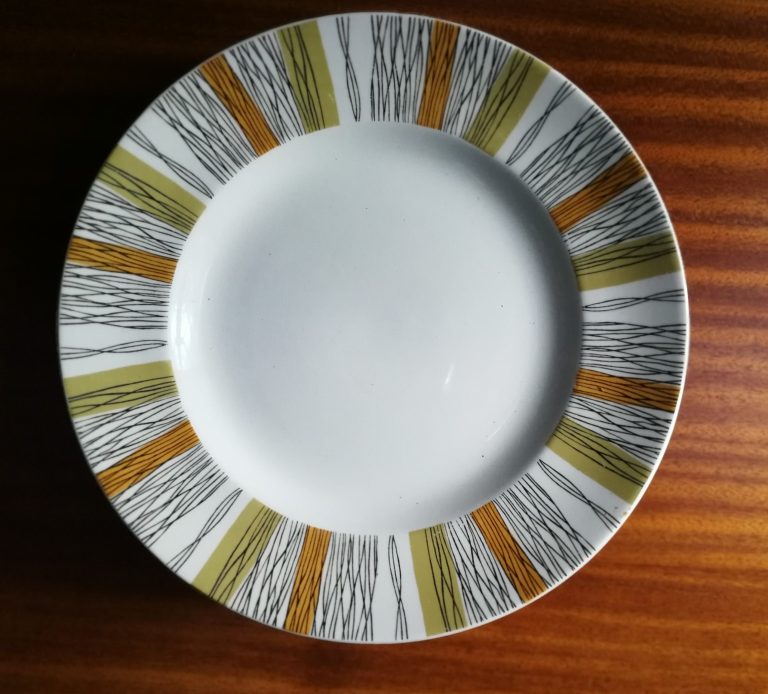
Midwinter’s own designs, from the Stylecraft range to Jessie Tate’s Sienna pattern, are collectable in their own right, and make a natural next chapter alongside her work.
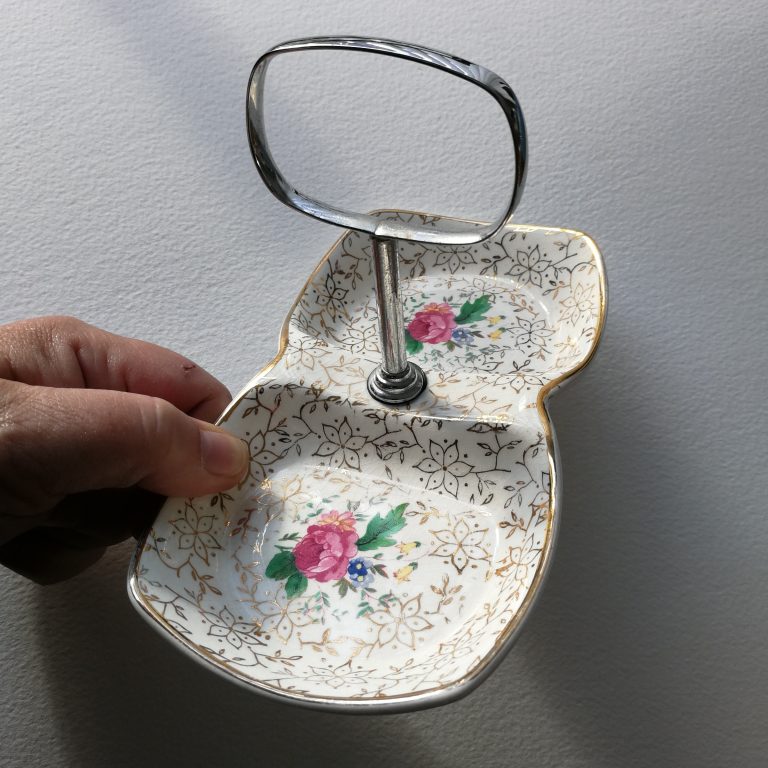
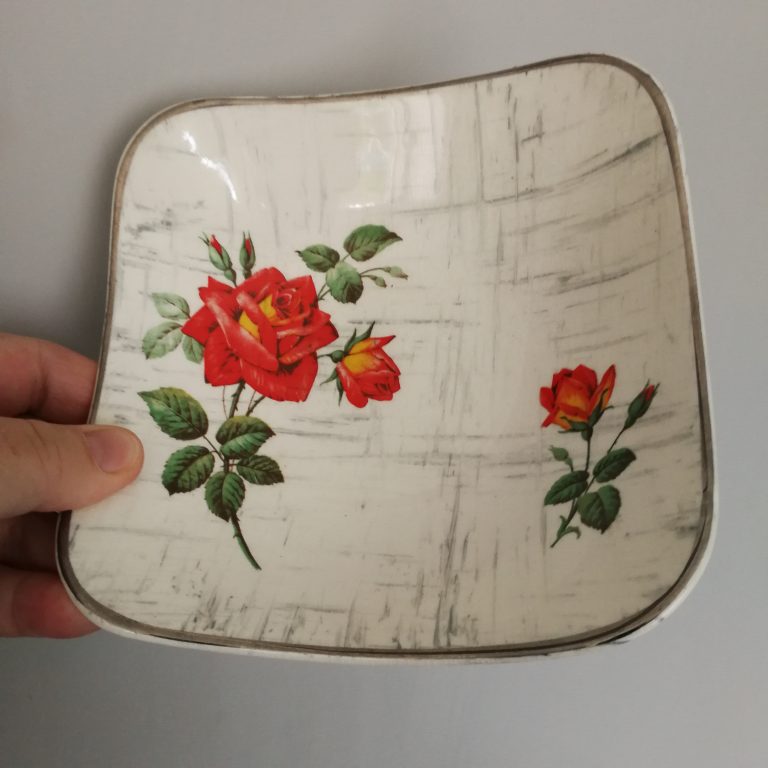
Pieces in our shop with a Clarice Cliff connection:
Sources: Wikipedia: Clarice Cliff; details of individual pieces from the items themselves and their makers’ marks.
Love these finds?
Keep it for later, or share it with a fellow collector.
