
Vintage and mid-century finds, hand-picked in South Wales
Three Victorian favourites: colourful majolica, mantelpiece dogs and glowing cranberry glass.
Bright glazes, mantelpiece dogs and glowing pink glass: the Victorians loved colour and ornament in the home. Here are three of their favourites, all represented in the shop.
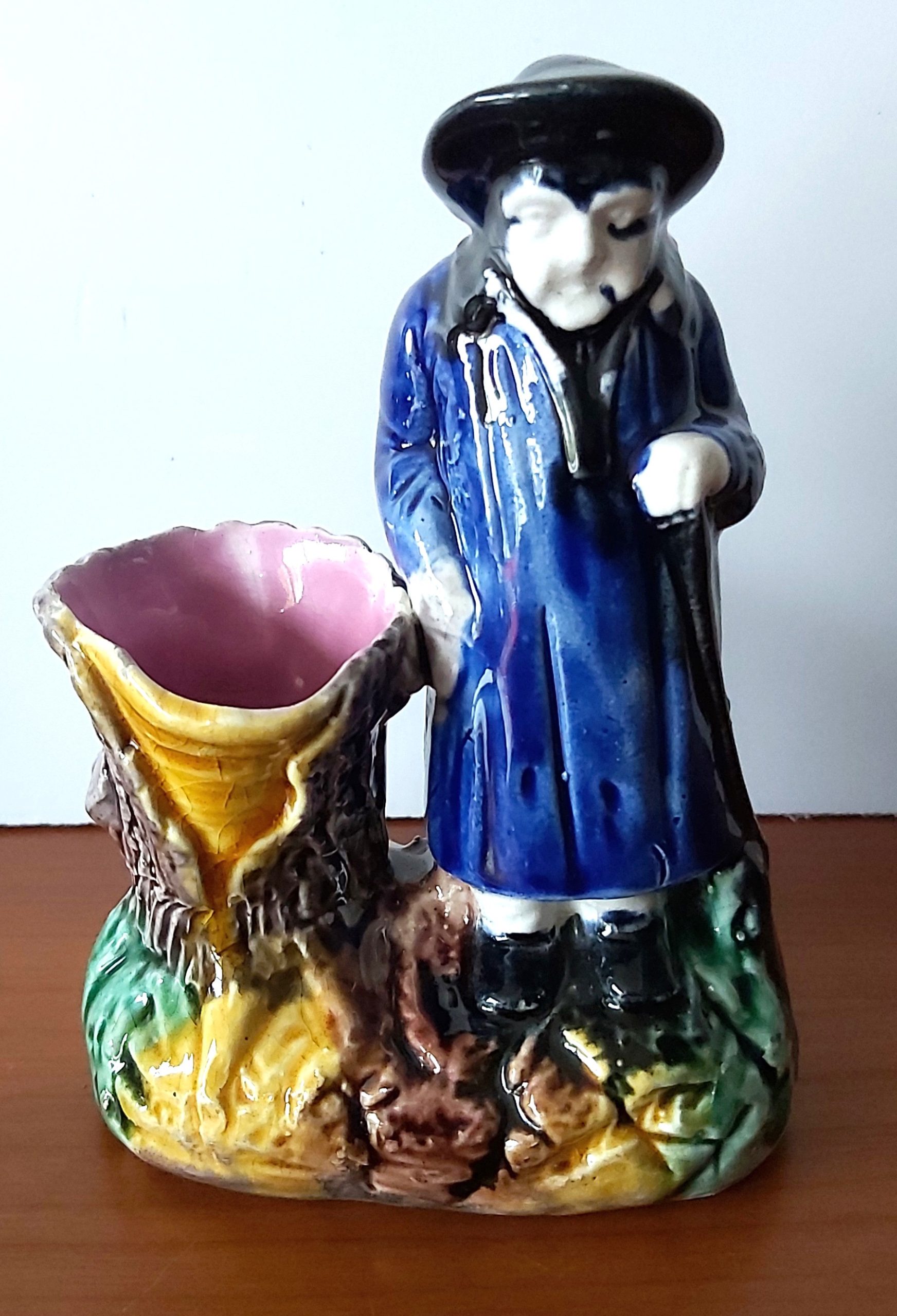
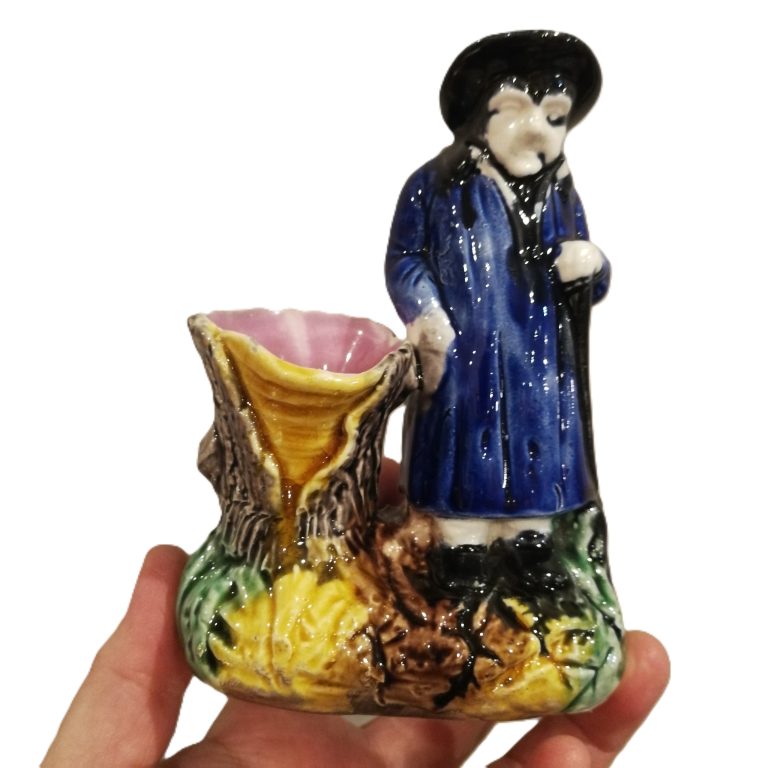
Majolica was the sensation of the 1851 Great Exhibition in London. Minton & Co., under its French artistic and technical director Léon Arnoux, developed a new kind of pottery decorated with thick, brightly coloured lead glazes, fired just once. It was hard-wearing, affordable and often modelled on nature: leaves, fruit, fish and birds. The style was copied widely across Europe and America, and by the 1880s “majolica” was the name for all such ware.
Our Minton majolica spill vase is decorated with a “Hearty Good Fellow”, the jovial drinking character familiar from Toby jugs. A spill vase stood on the mantelpiece holding paper spills for lighting candles and pipes from the fire.
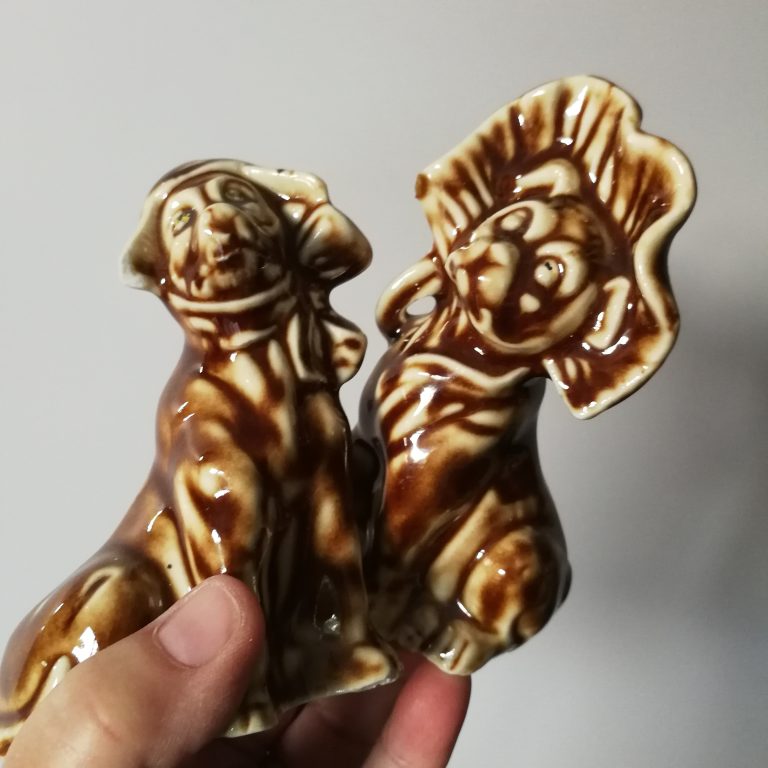
No Victorian fireplace was complete without a pair of pottery dogs, usually spaniels, facing each other from either end of the mantelpiece. Their popularity rose in the 1840s, helped by Queen Victoria’s own spaniel, Dash. They were nicknamed “comforters” and, in Scotland, “wally dugs”. Thousands were made, and the brown “treacle” glaze of our little bonneted dogs is one of the most charming finishes. Matching original pairs in good condition are now hard to find.
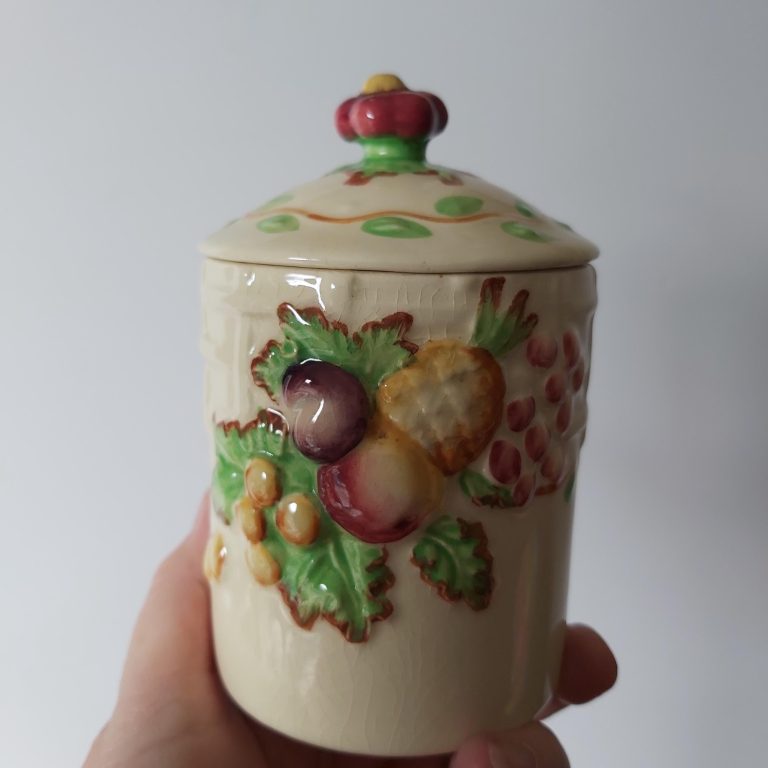
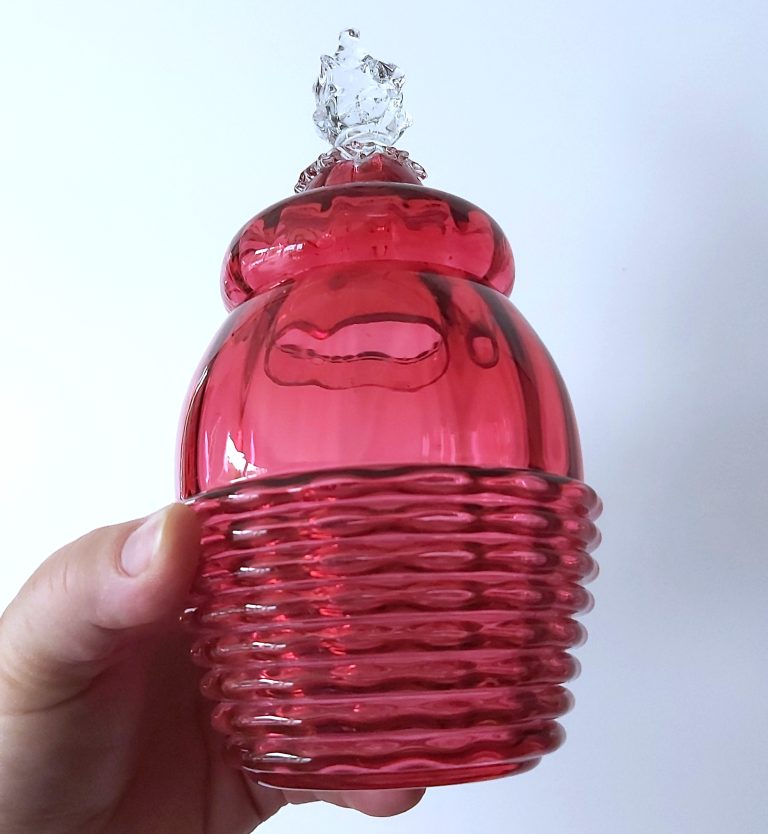
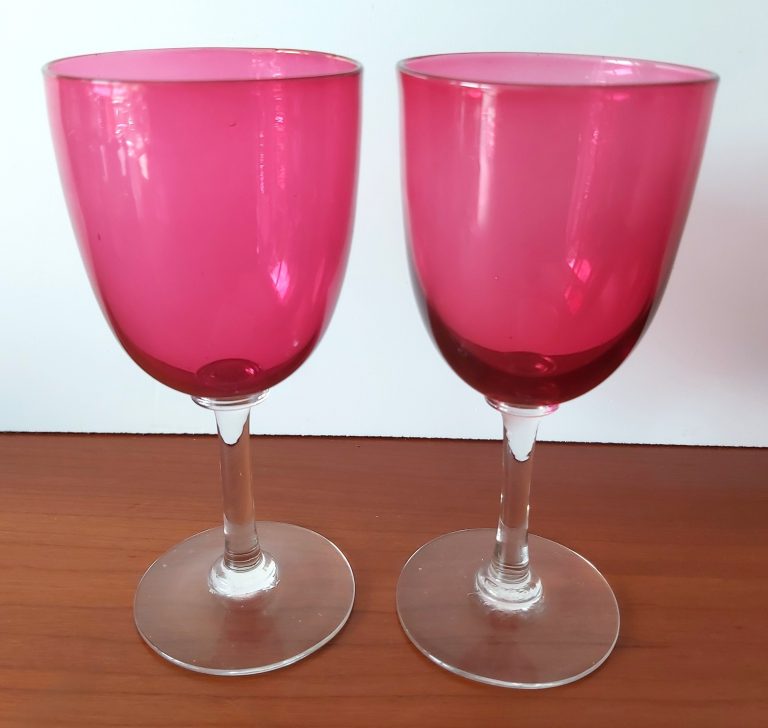
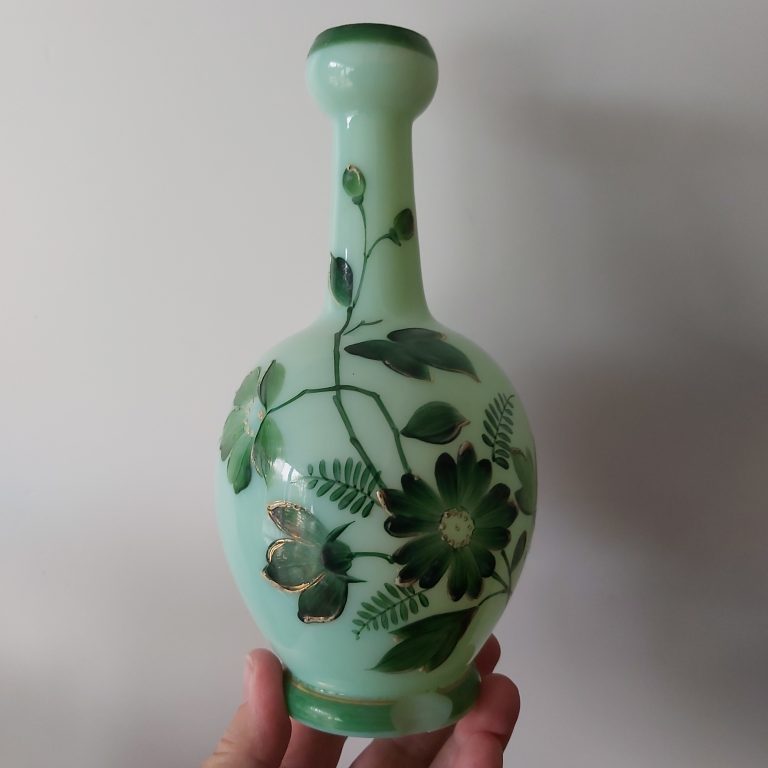
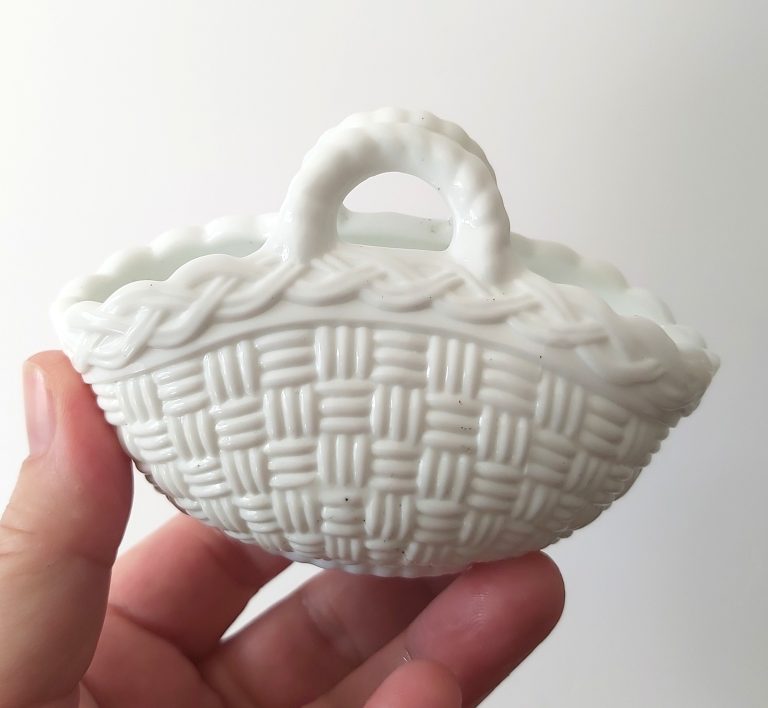
Victorian glassmakers loved colour too. Cranberry glass, with its rich pink-red, was made by adding a small amount of gold to the glass, and was used for everything from sugar bowls to lidded pots. Opaline glass, milky and pastel, was often hand painted with flowers.
Sources: Wikipedia: Majolica; Wikipedia: Staffordshire dog figurine.
Love these finds?
Keep it for later, or share it with a fellow collector.
